
This post is from a suggested group
ZECPlayground – Late Night
I kind of drifted into trying ZEC games after I got bored with the usual BTC stuff and wanted to experiment with something different, and honestly I didn’t expect much at first.
5 Views
View groups and posts below.
This post is from a suggested group
I kind of drifted into trying ZEC games after I got bored with the usual BTC stuff and wanted to experiment with something different, and honestly I didn’t expect much at first.
This post is from a suggested group
One key advantage of an Education Smart Display is improved lesson delivery. Teachers can present multimedia content such as videos, charts, images, and digital notes on one screen. This makes lessons more engaging and helps students understand complex topics more clearly. Visual learning methods are especially effective in subjects that require demonstrations or step-by-step explanations.
Another benefit of the Education Smart Display is classroom interaction. Students can write on the screen, move objects, solve exercises, and participate directly in lessons. This hands-on involvement often increases concentration and encourages active learning. It also helps teachers assess student understanding in real time.
Collaboration is another important feature of the Education Smart Display. Multiple users can interact with the display during group projects or classroom discussions. This supports teamwork, communication skills, and shared problem-solving experiences that are valuable in academic settings.
The Education Smart Display also plays an important role in remote and hybrid learning. It…
This post is from a suggested group
I came across this topic more than once and didn’t react to it at first. Later I noticed it again and decided to read a bit just to understand the general idea. I didn’t open anything and stayed only with comments and short discussions. In one place, someone mentioned free porno in a very обычному way, and it didn’t stand out at that moment. After that I started noticing similar mentions in other places, which made me read more carefully. Some parts look simple when reading fast, but then it feels like something is missing. Because of that, I didn’t move further and just kept reading more. I’m still at this stage and not sure if reading is enough to understand everything fully. Do others also take time like this before doing anything?
I had a similar experience when I first noticed mentions like that. I didn’t go further right away and stayed with reading for some time. It felt easier to look at small parts of information instead of trying to understand everything at once. Sometimes people describe the same idea differently, and that can make it less clear overall. I tried to stay patient and read without rushing into conclusions. After some time, certain parts became clearer, but not everything. It feels like something that needs time and attention.
This post is from a suggested group
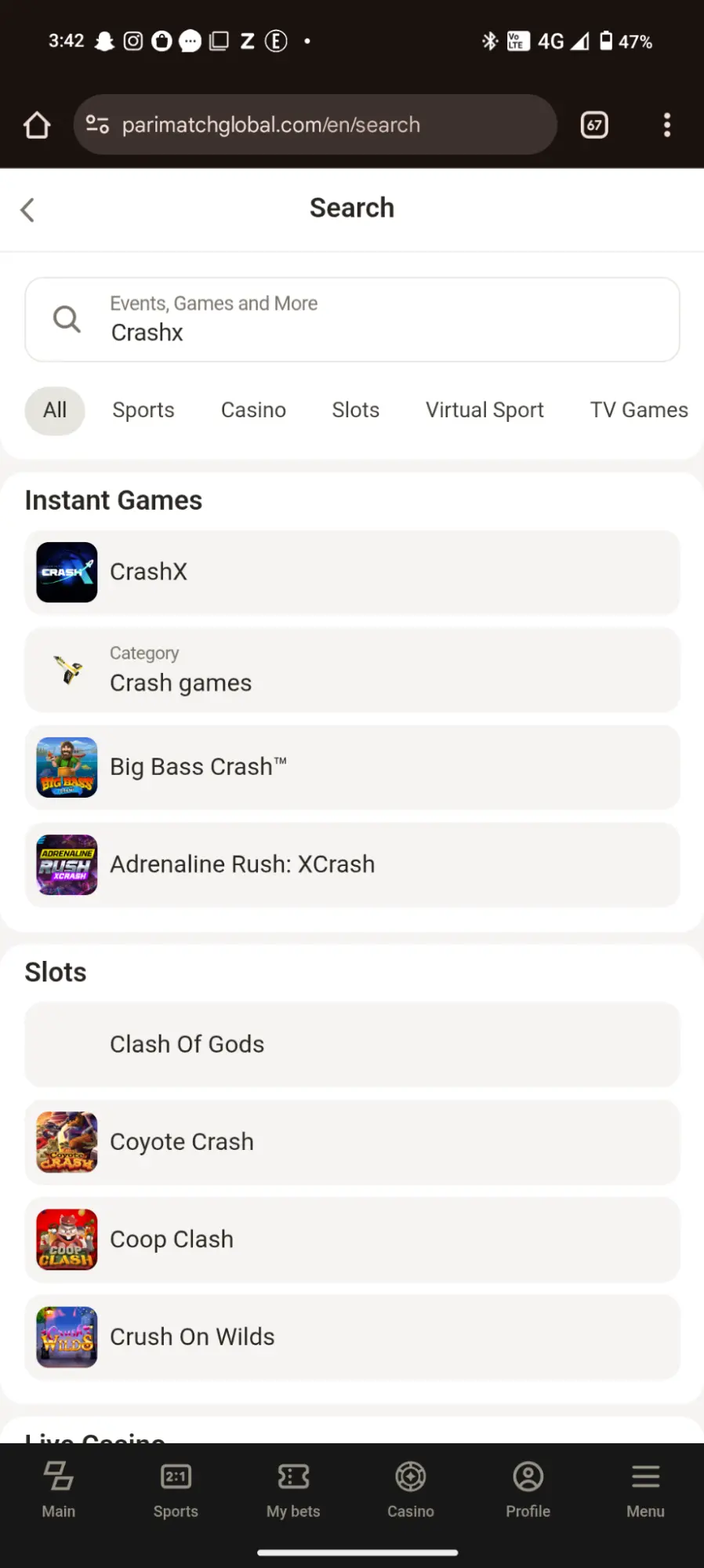
In some cases, people mention Search Crash X on Parimatch when they are trying to quickly locate a specific type of game without browsing through multiple sections. It’s usually seen as a simple way to narrow things down and view only the relevant options, rather than scrolling through everything manually.
This post is from a suggested group
I really enjoy how
incorporates bonus rounds into their. It's exciting to have that extra chance to win big, especially when the gameplay gets intense. I recently played a few games that had unique themes and engaging storylines, which made it even more fun. If you're interested in exploring different , I recommend checking out their variety online. They’ve got an impressive selection that really enhances the whole experience!
This post is from a suggested group
One page describes AI processing applied specifically to facial images in a certain way. The address is here. It contains sections labeled How to use, About, Advantages, Packages and FAQ. The steps presented are mode selection, image upload, and browser-based completion. Multiple modes appear in the list with some mention of resolution settings. The description includes automatic face alignment and texture overlay. Output quality is likely influenced by the characteristics of the uploaded image. Variation in performance across inputs is not immediately obvious.
That page outlines a basic flow: choose mode, submit image, process. It notes detection of facial regions before any modification. Trial access is available along with tiers that alter quality or remove limits. Processing is presented as contained within the browser without long-term storage. Section navigation occurs via a top bar. Links to related content sit at the bottom. Trial outputs are usually limited in scope or detail.
This post is from a suggested group
In 2026, Pear Juice has emerged as a premium functional beverage, prized for its unique concentration of sorbitol and polyphenols. Unlike apple juice, pear juice is characterized by its high "viscosity" and the presence of stone cells (sclereids), which are often managed through advanced enzymatic liquefaction.
FODMAP Awareness: High-quality pear juice is frequently utilized as a natural sweetener in health-conscious diets due to its low-acid profile, making it gentler on the gastric lining compared to citrus.
Cold-Press Preservation: Modern 2026 processing utilizes High-Pressure Processing (HPP) to maintain the delicate aromatic esters of the fruit, ensuring that the juice retains its "fresh-picked" flavor without the cooked taste associated with thermal pasteurization.
Isotonic Properties: Because of its natural electrolyte balance and low glycemic index, pear juice is increasingly used as a base for natural sports recovery drinks.
This post is from a suggested group
Інколи складно зрозуміти, де саме знаходиться офіційний сайт українського бренду одягу, бо часто трапляються різні сторінки з подібними назвами. Я зараз шукаю жіночі плаття та светри й хочу замовляти безпосередньо з ресурсу, де представлений повний каталог. Для мене важливо, щоб були всі категорії з актуальними моделями та сторінка про бренд. Також звертаю увагу, чи є відгуки покупців, щоб зрозуміти реальний досвід інших. Хотілось би знайти саме той сайт, де можна переглянути весь асортимент в одному місці. Може хтось підкаже, як переконатись, що це офіційна сторінка бренду.
Коли я шукала плаття українського виробництва, то одразу звернула увагу на те, щоб це був офіційний сайт із повним каталогом. На ресурсі 25 Union є структуровані розділи з платтями, светрами та іншими категоріями жіночого одягу. Мені було зручно, що присутня сторінка про бренд із зазначенням року заснування та описом діяльності. Окремо можна знайти відгуки покупців, що допомагає зорієнтуватись перед замовленням. Я переглядала жіночий трикотаж 25 Union саме там, бо хотіла бачити всі доступні моделі в одному каталозі. Також сподобалось, що доступні різні мовні версії сторінок. Це дозволяє впевнено розуміти, що знаходишся на основному ресурсі бренду.
This post is from a suggested group
The ultimate value of Computed Radiography lies in its seamless integration with the Picture Archiving and Communication System (PACS). Once the reader digitizes the image, it is formatted according to the DICOM (Digital Imaging and Communications in Medicine) standard.
This allows the image to be:
Transmitted Instantly: A radiologist can view an image in a different building or city seconds after it is scanned.
Stored Efficiently: Eliminating the need for physical film archives and the hazardous chemicals associated with traditional developing.
Compared Longitudinally: Doctors can pull up a patient’s chest X-rays from five years ago and display them side-by-side with today’s CR image on a high-resolution diagnostic monitor. This connectivity is the backbone of modern Teleradiology, enabling 24/7 diagnostic coverage even in remote areas that only have basic X-ray equipment but are equipped with a CR reader and an internet connection.
What also stood out was how some of the original games have more going on visually and mechanically, so you don’t feel like you’re stuck in a loop. For me, I ended up sticking with DD because it handled both quick bets and longer sessions pretty well, and I didn’t run into weird delays or inconsistencies during play. My advice would be to treat the bonus as something extra, not the main goal, and focus more on how the platform behaves over time, like how smooth the betting flow is and whether you feel in control of your pace.